Aviation of World War II


|
|
Aviation of World War II |
|
|
Soviet Union | Lend - Lease | Facts | Forum | Germany | Japan | R A F | U S A A F | Other | Photos | ||
|
| ||
Bf-109G
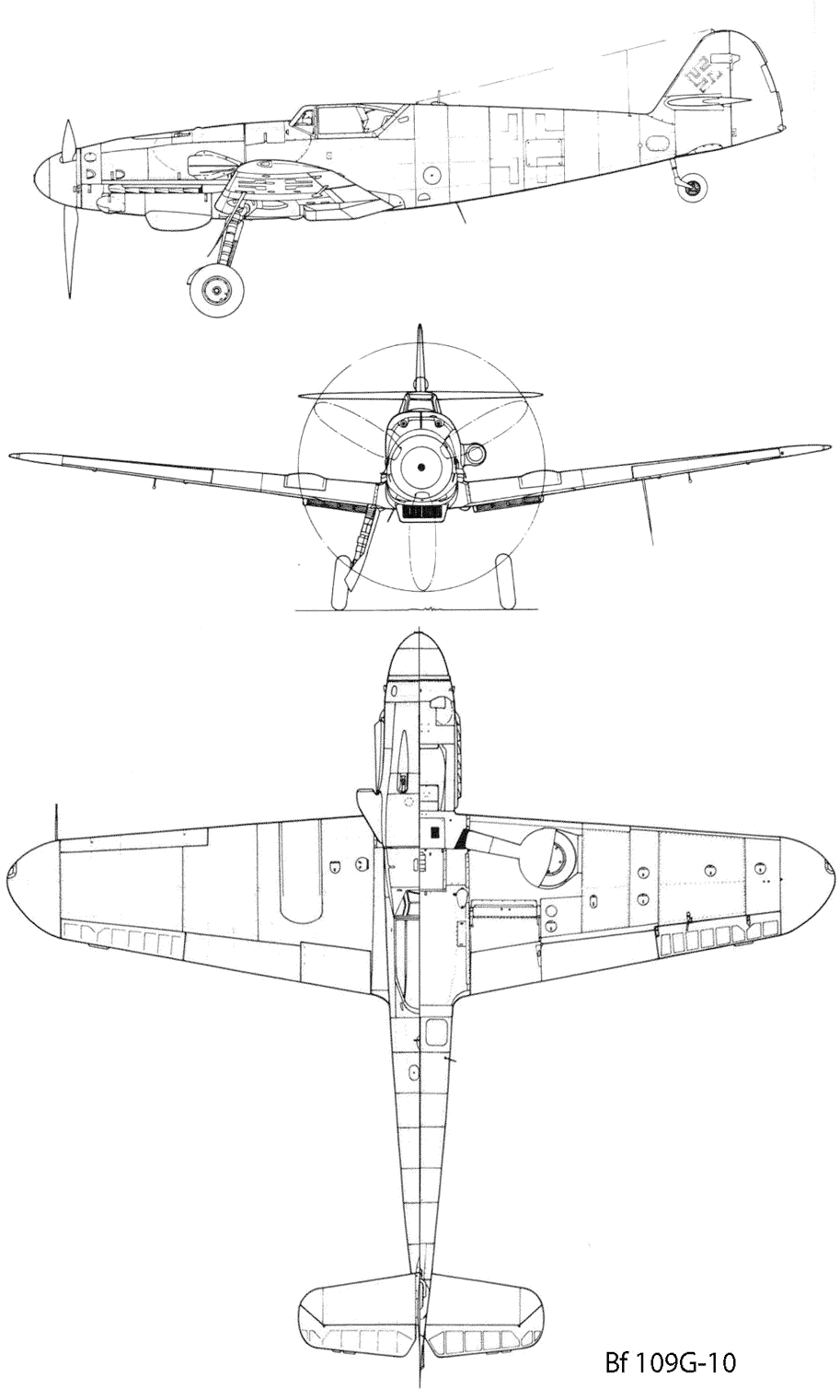
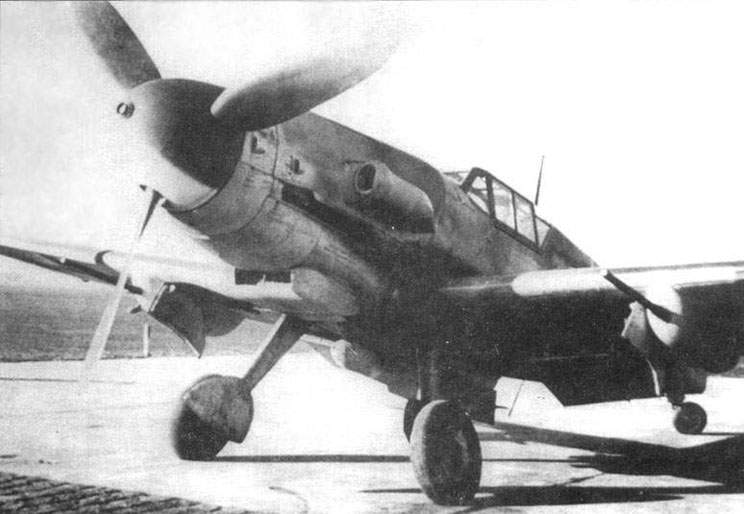
The pilots of this car noted that a slight increase in speed (achieved by installing a more powerful DB-605 engine) resulted in a deterioration in the overall controllability of the car. The Bf 109G went into production in the summer of 1942 and was produced in versions with a pressurized cabin (odd version numbers) and without a pressurized cabin (even numbers). The main modifications were the G-1 and G-2 with the DB-605A engine, one 20mm cannon and two 7.62mm machine guns; G-3 and G-4 with modified radio equipment; G-5 and G-6 with more powerful gun armament. Armament Me 109G6 - one 15-mm MG-151/15 motor machine gun with 150 rounds of ammunition and two 13-mm MG-131 synchronous machine guns with 150 rounds of ammunition per machine gun and two 20- mm guns MG-151/20 in gondolas under the wing with ammunition for 120 rounds per gun. In addition, there were reconnaissance versions of the G-8 and G-10, equipped with an 1850-horsepower DB-605D engine and a training two-seat G-12. The G-14 was an improved version of the G-6, while the G-16 was an improved version of the G-14. The pressurized cabin was not installed on models starting with Bf-109G-6. 
|
|
|

Bf.109G6 from JG 52 Bibliography
|
||||||||||||||||||||||||||||||||||||||||||||||
 Aircraft